When Should a Business Build Custom Software?
Cloudesk Editorial · October 11, 2026
Custom software is a strategy decision. Build when off-the-shelf tools force endless workarounds — or when the software itself is what customers buy.
Build when the workflow is your advantage or your integration mess is eating headcount. Do not rebuild a fine SaaS tool out of pride.
Build when workarounds become a department. Buy when the category is solved.
Let’s talk about when to build custom software the way operators talk about it: trade-offs, failure modes, and what “good” looks like when money and time are both limited.
Build for advantage
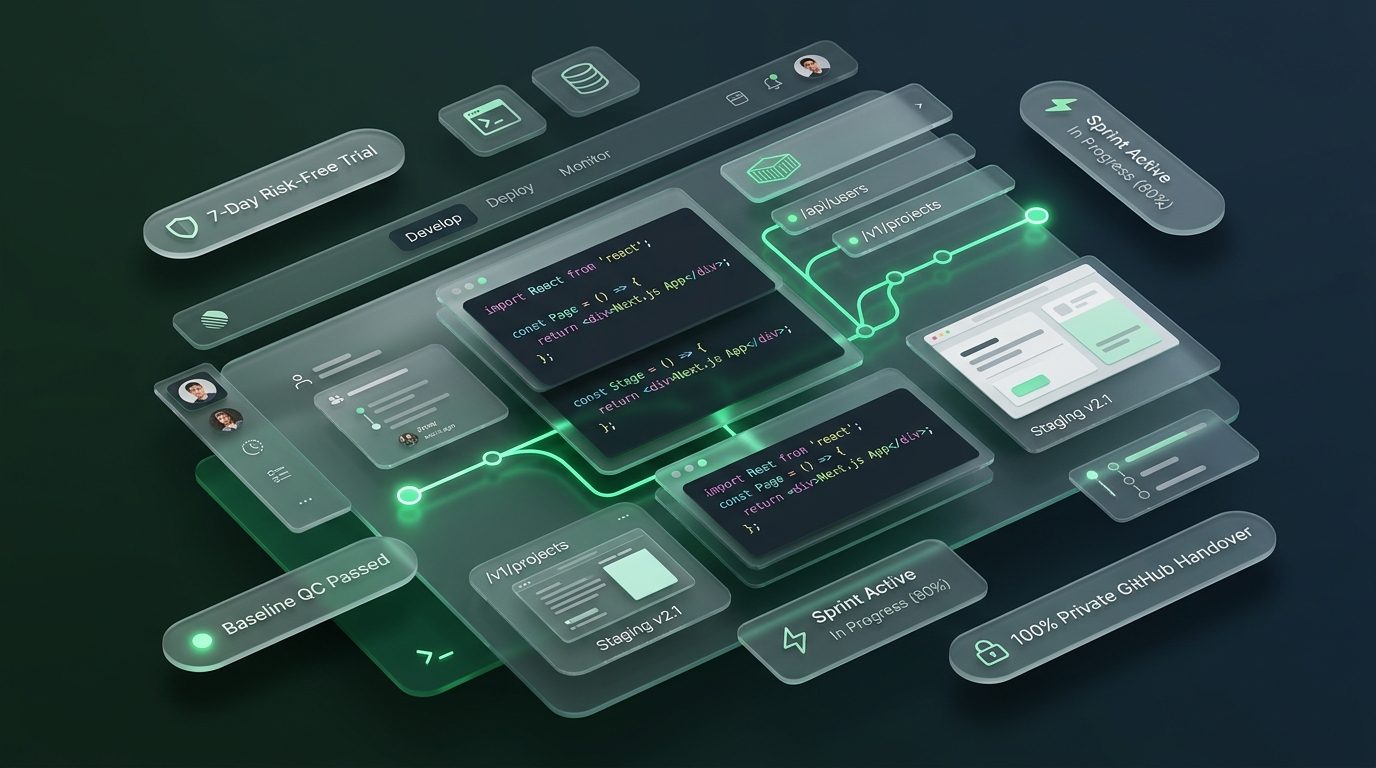
If your process is why you win deals, encoding it can multiply the team.
Build for integration reality
When five tools refuse to talk, custom glue (done well) beats human copy-paste departments.
Build for control/compliance
Sometimes you need ownership of data paths and logic that vendors cannot promise.
Do not build for vanity
Rebuilding Jira poorly is not innovation. Buy unless the gap is material.
Start with a seat, not an empire
Prove the workflow with a Software Developer subscription slice before staffing a department.
Build triggers
| Trigger | Action |
|---|---|
| Differentiating workflow | Build |
| Commodity process | Buy |
| Integration chaos | Build glue carefully |
| Unclear problem | Do not build yet |
What I’d do in the first two weeks
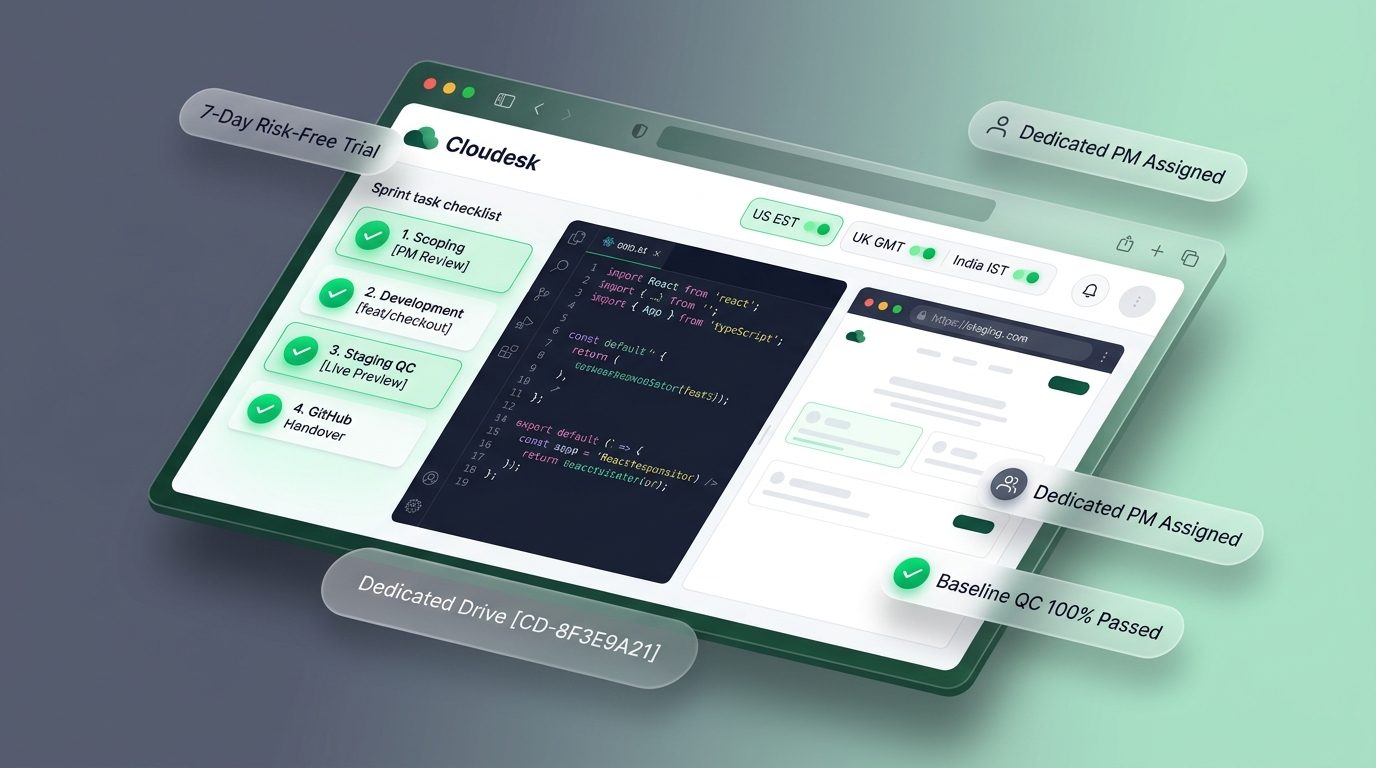
Week one: write one outcome tied to when to build custom software, configure the smallest honest seat, and confirm a checklist with a Project Manager before anyone “just starts.” Week two: ship a thin slice, review against the checklist, and only then decide to upgrade hours or add another role. If week one is all meetings and no confirmed scope, stop and fix that — more people will not help.
Mistakes that quietly burn money
1. Building a platform before a workflow
If one user job is not complete end-to-end, architecture theater is premature.
2. Hiring only engineers when UX is the blocker
Add Design early for SaaS conversion and activation flows.
3. Fixed-bid fantasies with living discovery
When learning weekly, buy capacity seats and scope checklist slices.
4. Skipping QC to hit a demo date
Demo debt becomes churn. Baseline QC is part of speed.
Before you pay anyone
Run through this once — out loud if you have a co-founder:
- What is the single user job for the next release?
- MVP, v1, or growth hardening?
- Which seats: Software, App, AI, Design?
- Weekly vs Monthly based on daily shipping need?
- What metric proves the slice worked?
Where Cloudesk fits
If you want the middle path between freelancers and a heavy agency, Cloudesk is built as subscription seats with chat-first PM delivery.
New clients get 30% off the first purchase total. Autopay is optional. Cancel at period end from Billing. Skills on a role are configuration at +$0, not nickel-and-dime add-ons.
For when to build custom software, configure a Software Developer seat, write one vertical slice with your PM, and only add App/AI/Design seats when that slice proves the need.
Related seat: Software Developer · configure on Pricing.
FAQ
How should startups approach when to build custom software?
Narrow scope, buy Software (and companion) seats, confirm checklists, ship a thin vertical slice, then expand seats when blocked — not before.
Does Cloudesk give fixed project quotes?
Cloudesk sells capacity seats. Your PM estimates checklist items inside your prepaid hours.
Is Monthly 160h required for SaaS?
No. Many teams start at Monthly 80h or Weekly 40h and add seats.
Are cloud bills included?
No. Hosting/API bills are separate from development seats.
Where do I configure?
/pricing — first purchase is 30% off the total.
What if priorities change mid-cycle?
Tell your Project Manager and re-confirm the checklist. Prepaid hours are capacity — not a prison for a stale brief about when to build custom software.
Next step
When you are done comparing tabs on when to build custom software, configure a Cloudesk seat and judge it on shipped work.
Need a AI & LLM Integration Developer?
Build production LLM pipelines, autonomous reasoning agents, vector RAG search, and custom ML workflows. Hire pre-vetted senior talent on flexible weekly or monthly subscriptions. Save up to 60% vs. in-house US payroll with zero recruiter fees and no long-term lock-in.
Explore Popular Engineering Roles